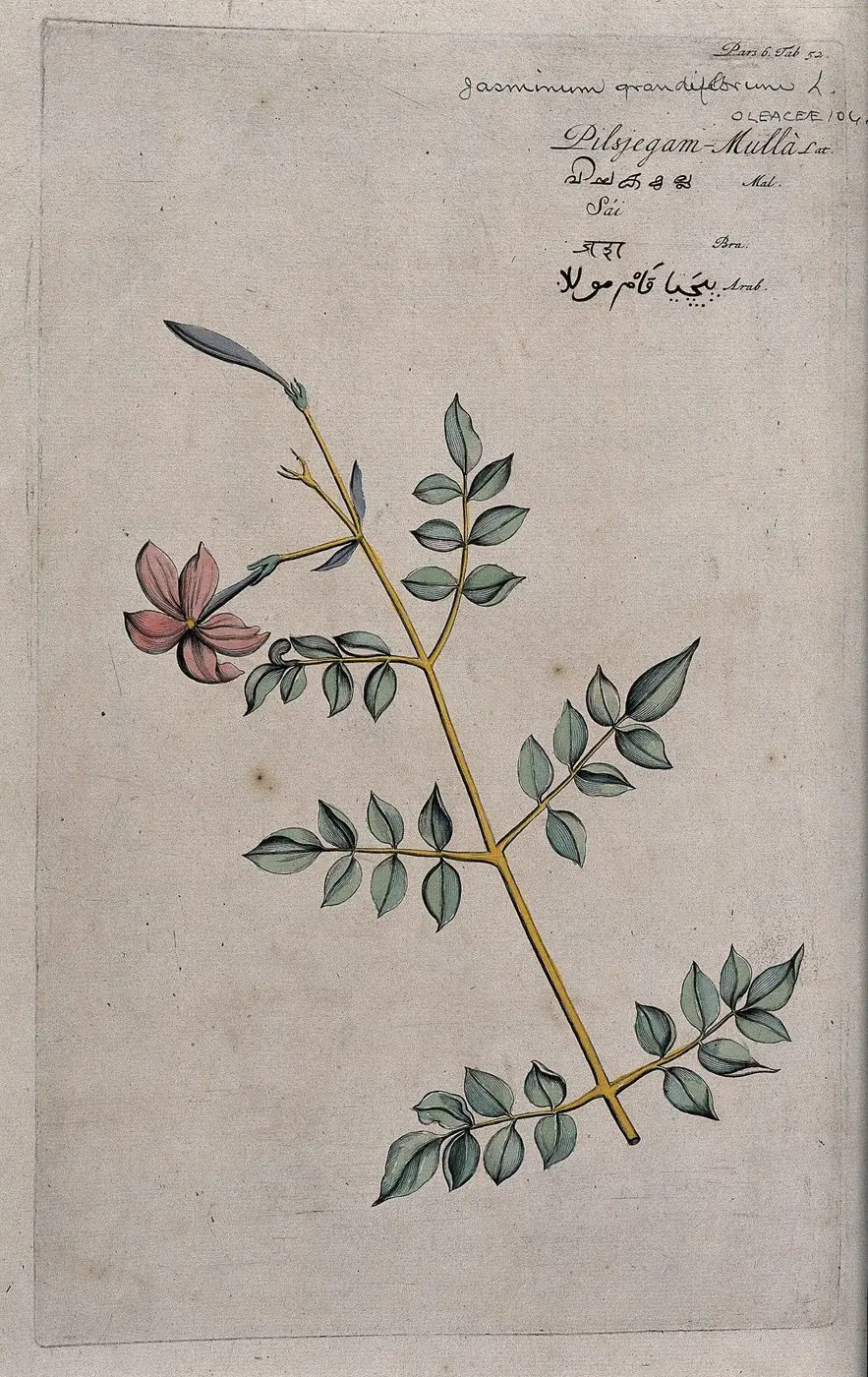
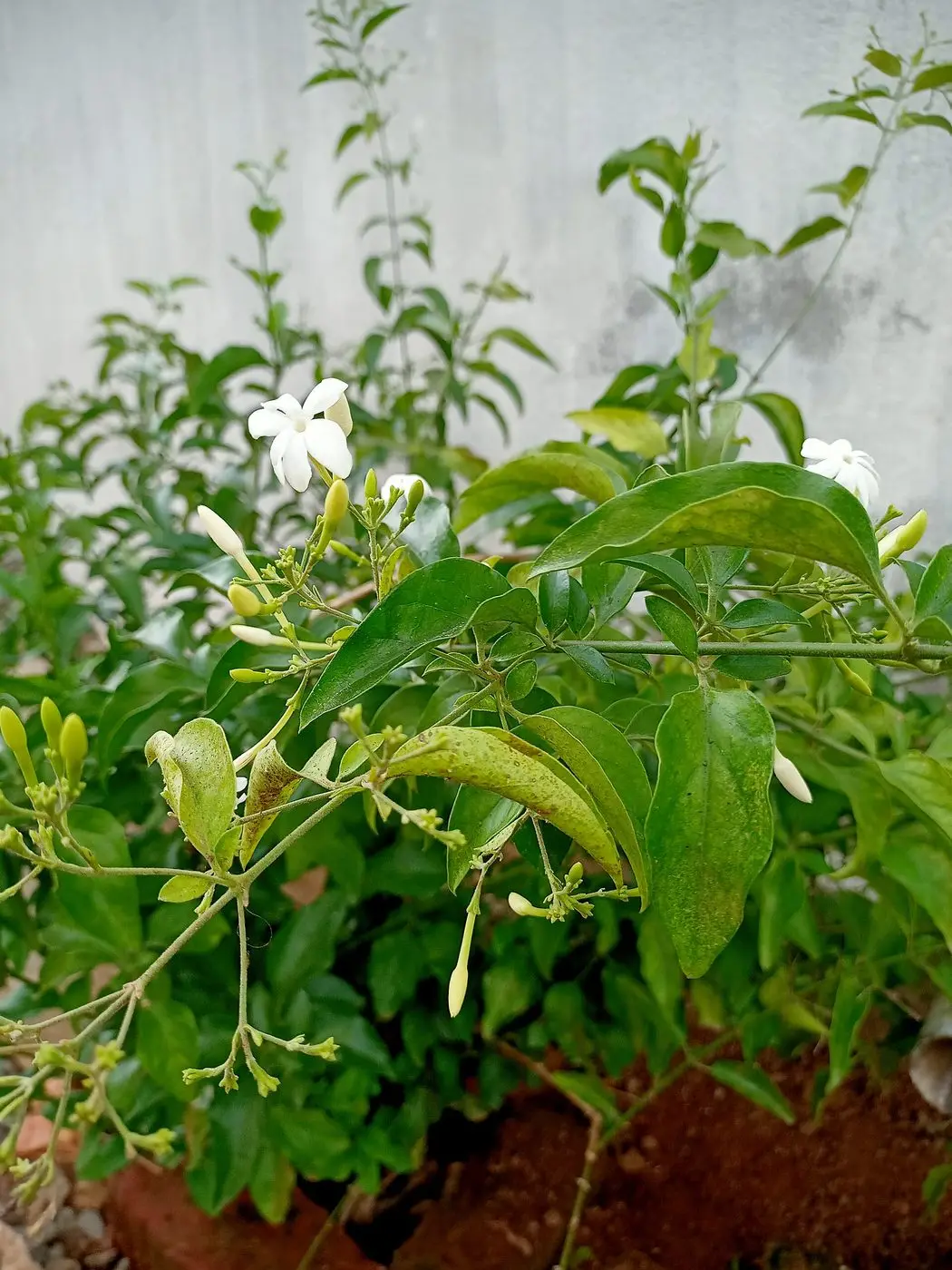
Jasmine absolute is solvent-extracted from fresh jasmine flowers, first into a waxy concrete and then washed with alcohol to give the absolute. Two species dominate: Jasminum grandiflorum, grown mainly in Egypt and India and historically in Grasse, and Jasminum sambac, the denser, greener, more indolic jasmine of India and southern China.
The flowers open at night and must be picked early in the morning, by hand, before the heat drives off their scent. Thousands of blossoms make a single kilogram of concrete, and Egypt is among the largest producers of grandiflorum concrete. Benzyl acetate, benzyl benzoate, linalool, indole, cis-jasmone and methyl jasmonate shape the profile; their balance changes with species, origin and harvest.
Because jasmine is expensive, reconstitutions and cut absolutes are common. A lot-specific GC-MS and a statement of species, origin and process are the minimum documentation; IFRA and allergen information are needed for finished-product compliance.