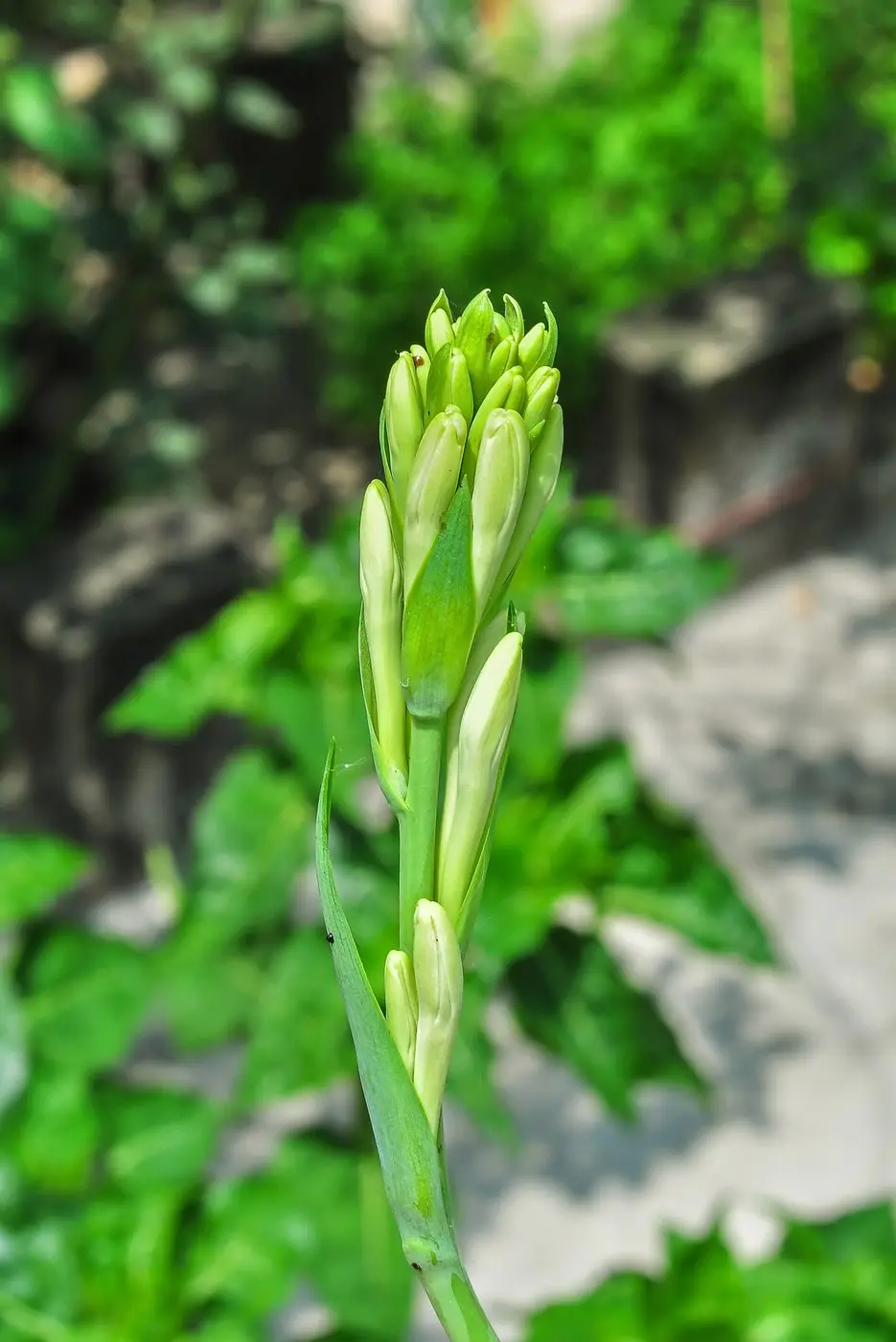
Tuberose absolute is solvent-extracted from the night-blooming flowers of Polianthes tuberosa. Grasse once led production; today India is the main source, with smaller amounts from other warm-climate growers. The yield is exceptionally low, which makes tuberose one of the most expensive floral absolutes.
Its scent is creamy, narcotic and slightly rubbery-green, built on methyl benzoate, methyl salicylate, benzyl benzoate, methyl anthranilate and indole, with lactones giving its milky, coconut-like depth. Historically tuberose was processed by enfleurage, because the cut flowers keep producing scent for some time after picking.
Its price makes tuberose a common target for reconstruction. Lot-level GC-MS, a declared origin and process, and evaluation against a reference sample are the practical safeguards.