Mozambique
No freely licensed photograph
Mozambique
Moma
Operated by Kenmare Resources
A dredge-mined heavy-mineral-sands operation on the Nampula coast producing ilmenite, zircon and rutile.
Demonstration dataListings, lots and offers shown are samplesAbout sample data
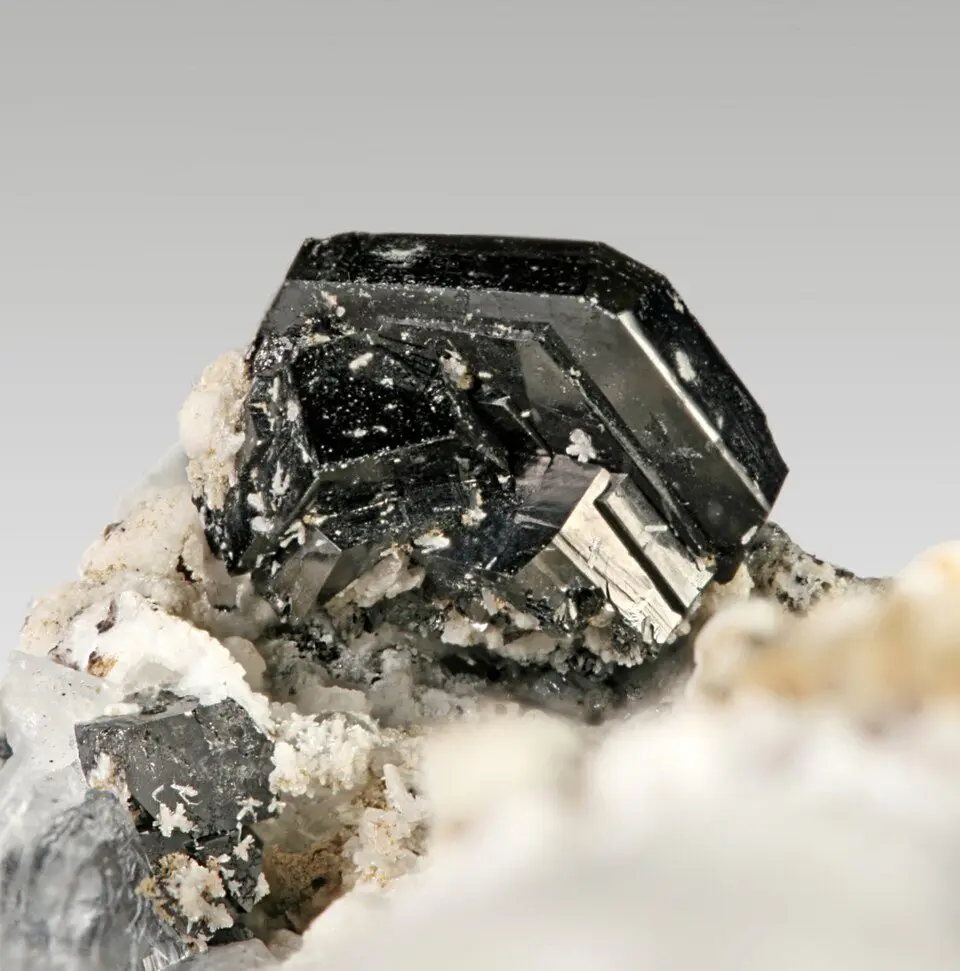
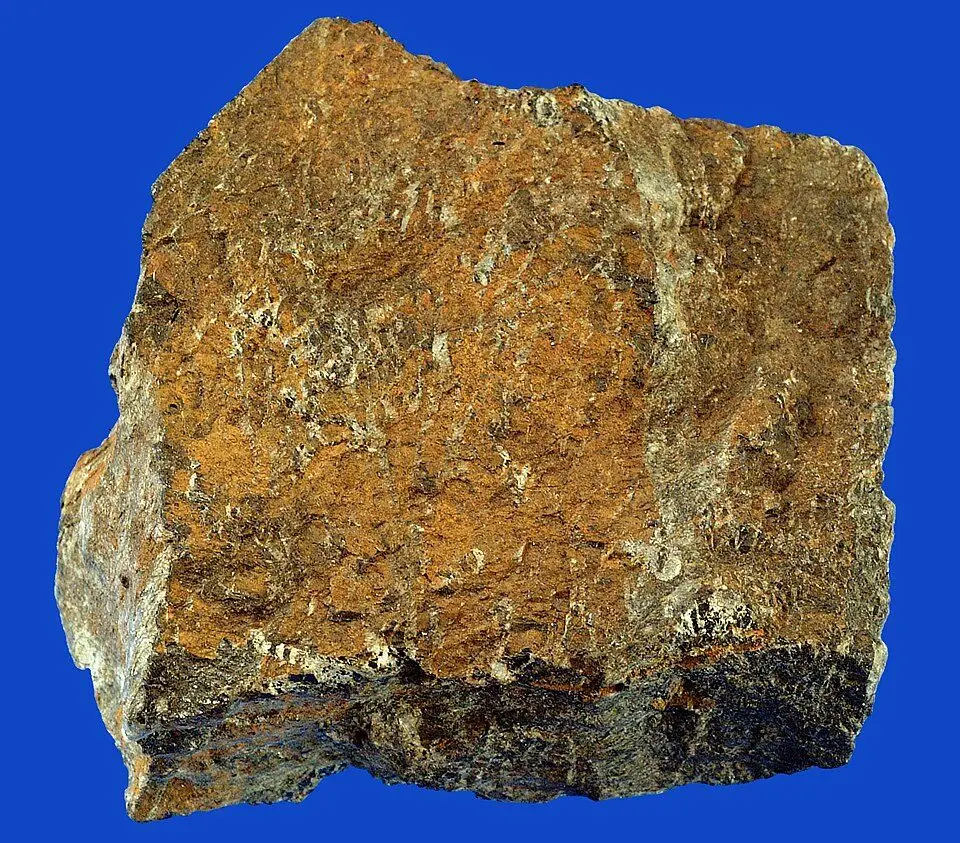
Reference specimen · Modris Baum, Public domain
Tech & industrial metals
Sample dataTitanium minerals come from heavy-mineral beach and dune sands. Ilmenite and rutile feed titanium dioxide (TiO2) pigment, the white in paint, plastics and paper, which takes about 90% of demand. They also feed titanium metal for aerospace and medical uses, and welding-rod coatings. Africa is a major producer: Mozambique (Moma), South Africa (Richards Bay), Senegal (Grande Côte), Kenya (Kwale), Madagascar (QMM) and Sierra Leone, home of Sierra Rutile, one of the world's largest natural rutile deposits.
Verified companies only
Volumes, origins and terms are shown to verified companies. Availability for everyone else: Contract. Verify your company or submit a request.
Ilmenite concentrate (FeTiO3)
Unit: t · HS 2614.00
~45–60% TiO2; sulphate-grade vs chloride-grade (higher TiO2, low Cr/Ca/Mg)
Natural rutile
Unit: t · HS 2620.99
~94–96% TiO2 (premium; chloride pigment, titanium sponge, welding)
Leucoxene (~70–90% TiO2)
Unit: t
Titanium slag / synthetic rutile
Unit: t
upgraded products (e.g. Richards Bay chloride slag ~85% TiO2)
ARAM sourcing assessment
Steady industrial demand with established producers; opportunity with smaller rutile/ilmenite projects and traders. Listing status: Contract.
Mozambique
Moma (Kenmare — one of the world's largest ilmenite producers); Corridor Sands and Nacala projects
South Africa
Richards Bay Minerals (Rio Tinto), Namakwa Sands (Tronox), Fairbreeze
Senegal
Grande Côte (Eramet)
Kenya
Kwale (Base Resources, winding down/transitioning)
Madagascar
QMM (Rio Tinto), Toliara (Base/Energy Fuels)
Sierra Leone
Sierra Rutile (Sierra Rutile Holdings)
USGS Mineral Commodity Summaries 2026 — African rows of the world production & reserves table
World Mine Production and Reserves: Significant revisions were made to 2024 production for Australia,
Madagascar11 300 300 30,000
Mozambique 1,930 1,900 NA
Senegal 345 370 NA
South Africa11 1,260 1,300 28,000
Kenya 41 — —
Mozambique 9 10 720
Sierra Leone 80 110 2,900
South Africa 102 100 6,200
World total (ilmenite, rounded)9 9,210 9,400 >490,000
| Year | Country | HS | Value | Net weight |
|---|---|---|---|---|
| 2024 | South Africa | 2614 | $591.3m | 806.5 kt |
| 2023 | South Africa | 2614 | $570.8m | — |
| 2023 | Mozambique | 2614 | $371.8m | 1.30 Mt |
| 2024 | Mozambique | 2614 | $349.4m | — |
| 2023 | Madagascar | 2614 | $172.0m | 613.2 kt |
| 2024 | Senegal | 2614 | $161.3m | 569.8 kt |
| 2024 | Madagascar | 2614 | $158.5m | — |
| 2023 | Kenya | 2614 | $145.3m | 293.1 kt |
| 2023 | Senegal | 2614 | $140.4m | 402.4 kt |
| 2024 | Kenya | 2614 | $102.2m | 187.2 kt |
Mirror data fills gaps where exporters report late or incompletely.
| Year | Buyer | Origin | HS | Value | Net weight |
|---|---|---|---|---|---|
| 2024 | China | Mozambique | 2614 | $716.3m | 2.30 Mt |
| 2023 | China | Mozambique | 2614 | $703.0m | 2.17 Mt |
| 2023 | Germany | South Africa | 2614 | $122.3m | 122.5 kt |
| 2023 | USA | South Africa | 2614 | $112.9m | 113.1 kt |
| 2024 | Germany | South Africa | 2614 | $109.3m | 126.1 kt |
| 2023 | Japan | South Africa | 2614 | $98.3m | 91.3 kt |
| 2024 | USA | South Africa | 2614 | $91.8m | 77.4 kt |
| 2024 | Japan | South Africa | 2614 | $81.3m | 86.2 kt |
| 2024 | China | Sierra Leone | 2614 | $72.8m | 111.9 kt |
| 2023 | China | Kenya | 2614 | $67.0m | 167.2 kt |
| 2023 | China | Sierra Leone | 2614 | $64.3m | 64.8 kt |
| 2023 | China | Senegal | 2614 | $58.8m | 152.7 kt |
Source: UN Comtrade (public data). Values in US$.
Minerals trade on formula prices: a published benchmark × metal content × payable percentage, less treatment charges and impurity penalties, settled on independent assay. Payment is typically by documentary letter of credit, with 90–95% provisional payment against shipping documents and the balance on final assay.
Request terms for Titanium Minerals (Ilmenite, Rutile)Cross-border
Permit / licence
Mineral licences; export permits; local processing push is weaker than for battery minerals
Primary source
Natural rutile ~95% TiO2 (Sierra Rutile, Sierra Leone — among the world's largest natural rutile operations); ilmenite ~45–60% TiO2 sold as sulphate or chloride grade; synthetic rutile/slag are upgraded products. Moma (Kenmare, Mozambique) is a leading ilmenite producer; rutile 8.6 kt in 2025 (reported). Other African sources: Richards Bay (South Africa), Grande Côte (Senegal), Kwale (Kenya, Base Resources), QMM (Madagascar).
Source 1 · kenmareresources.comSource 2 · kenmareresources.comSource 3 · miningweekly.comSource 4 · sierra-rutile.com
Research compiled September 2026 from USGS, UN Comtrade, producer and regulator publications. Facts marked “reported” come from secondary sources and should be confirmed before contracting.
On the ground · Titanium Minerals (Ilmenite, Rutile)
The mines and districts that define supply, with their operators. They are shown for geographic context: third-party operations, not ARAM sites, and not the source of any particular lot. Ownership and status as publicly reported in 2026.
Mozambique
No freely licensed photograph
Mozambique
Operated by Kenmare Resources
A dredge-mined heavy-mineral-sands operation on the Nampula coast producing ilmenite, zircon and rutile.
South Africa
No freely licensed photograph
South Africa
Operated by Rio Tinto
Dune mining and smelting on the KwaZulu-Natal coast producing titanium slag, zircon and rutile.
Senegal
No freely licensed photograph
Senegal
Operated by Eramet
A mobile dredge mine on Senegal's Atlantic coast north of Dakar — the world's fourth-largest zircon producer.
Modris Baum, Public domain
Mx. Granger, CC0
Robert M. Lavinsky, CC BY-SA 3.0
The original uploader was Walkerma at English Wikipedia., Public domain
Reference specimens of the ore minerals and products, from public collections. They illustrate the material, not a specific ARAM lot or source.
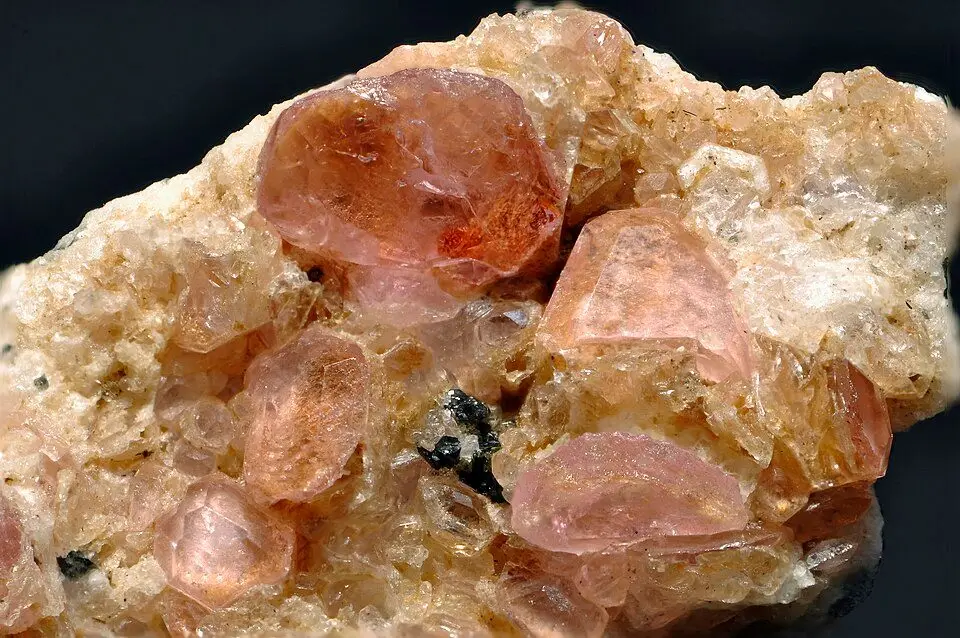
Tech & industrial metals
Zircon (ZrSiO4) is the co-product of titanium mineral sands. It is mainly used in ceramic tiles and sanitaryware as an opacifier, and also in foundry sands, refractories, zirconium chemicals, and zirconium metal for nuclear fuel cladding. African mineral-sands operations are major zircon suppliers. Senegal's Grande Côte is the world's #4 producer.
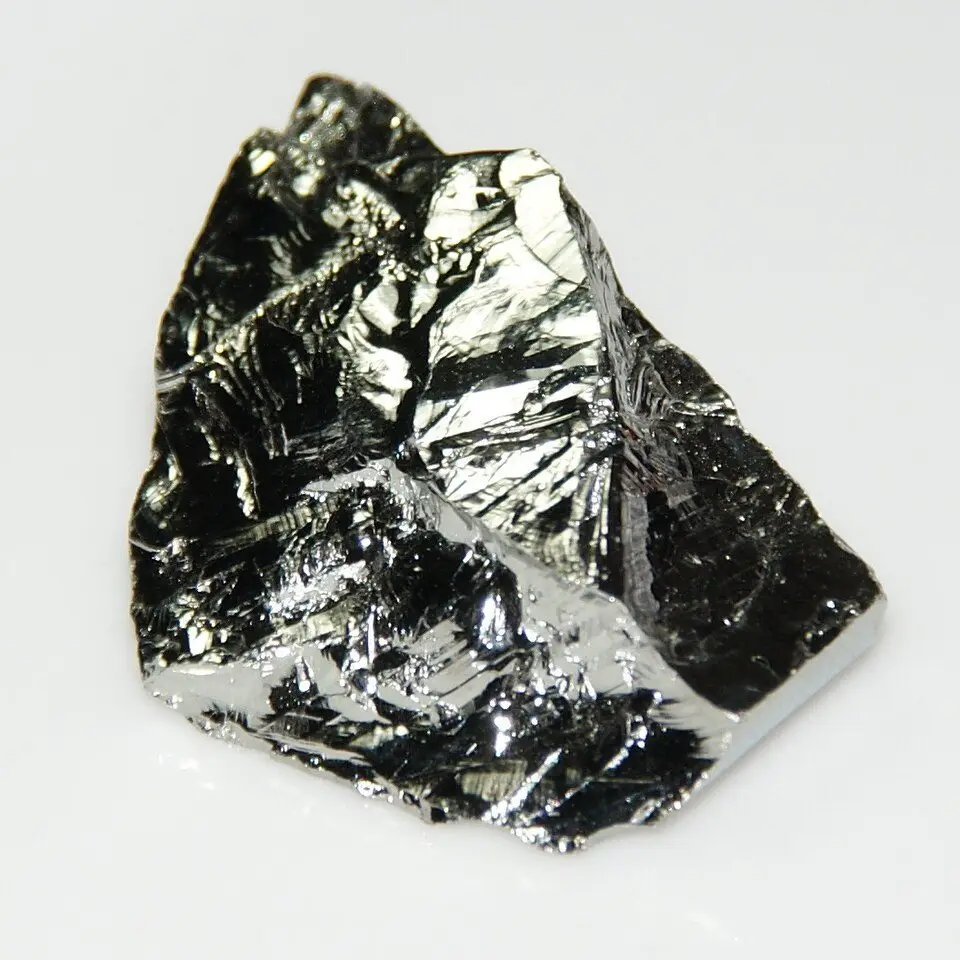 #07
#07Tech & industrial metals
Germanium is a minor metal used in fibre optics, infrared optics (night vision, thermal imaging for defence), satellite solar cells and semiconductors. China dominates supply and has restricted exports since August 2023, tightening further in 2024. The DRC's Big Hill tailings in Lubumbashi, historic slag and tailings from Gécamines' zinc-copper operations, are now one of the very few new non-Chinese sources: STL processes them and Umicore refines the concentrate in Belgium.
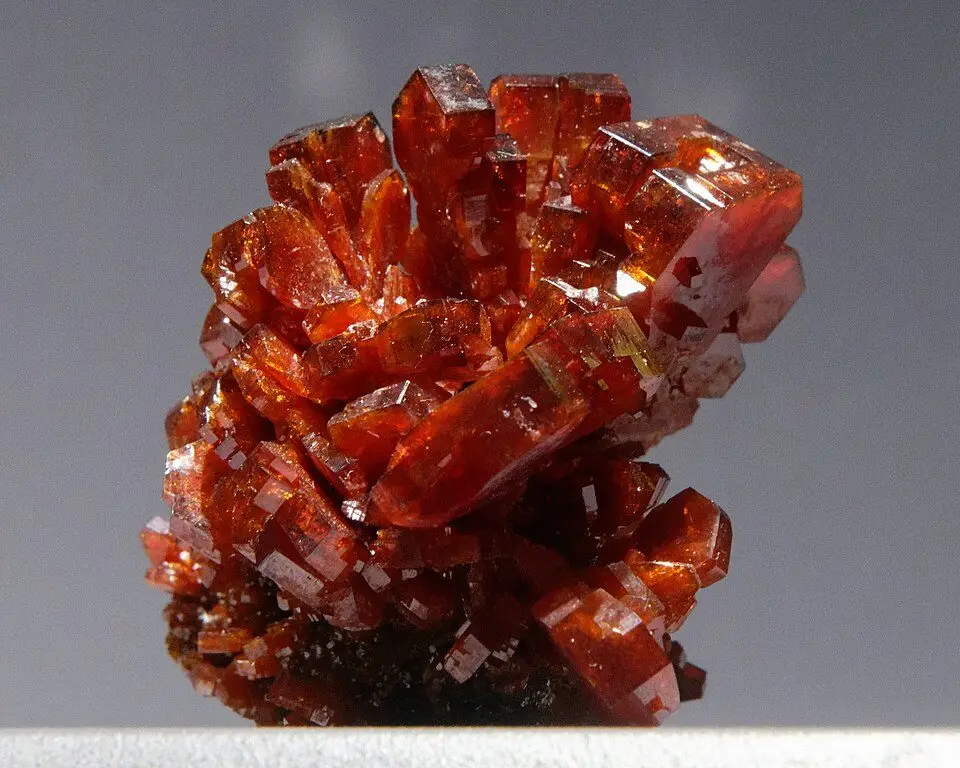
Tech & industrial metals
About 90% of vanadium is used to strengthen steel (ferrovanadium in rebar and high-strength low-alloy steel). The rest goes into titanium alloys for aerospace and into electrolyte for vanadium redox flow batteries (VRFB), which store grid-scale energy. South Africa's Bushveld titanomagnetite is one of the four big sources, with China, Russia and Brazil. Several South African plants have closed or cut output, so supply is concentrated.
Tech & industrial metals
Chromite ore is smelted into ferrochrome, which makes stainless steel stainless. South Africa's Bushveld Complex holds more than 80% of the world's chromite reserves and is the dominant exporter of chrome ore, mostly to China. A large share comes as UG2 chrome concentrate recovered from platinum-mine tailings. Zimbabwe's Great Dyke is the #2 African source, and Zimbabwe bans raw chrome ore exports to force local ferrochrome smelting.